
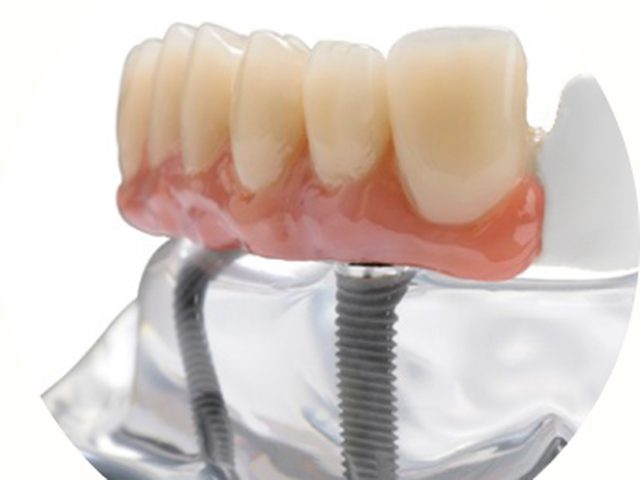

Implants when there is not enough bone
A second opinion on a case someone said could not be solved.
Rebuilding lost bone
Bone shrinks once a tooth is out. It is a normal process and it does not stop on its own, so a gap that has been there for years rarely has the height or the width left to take an implant in the position the tooth actually needs to be in.
What can be done
Block grafting, guided regeneration under a membrane, maxillary sinus lift, and for extreme cases anchorage in the areas of bone that have kept their volume. Which one applies is decided by the shape of the defect on the scan, not by preference.
If you are being treated in two countries, the radiology report and the surgical plan are issued in English.
-
Cases other clinics rule out
Severe bone loss has a solution with the right technique and planning.
-
Decided on the 3D scan
We measure the bone actually available before proposing any technique.
-
Without giving up aesthetics
Bone reconstruction also shapes the final aesthetic result, and is planned with it in mind.
At this clinic
Second opinions on both sides of the frontier
A good share of the patients who come here arrive with a previous diagnosis ruling implants out. We re-scan the case on our own CT and go through the options in English or Spanish, including the option of doing nothing.
The surgical plan is handed over in writing so another clinician can review it if you want a third view.
- Previous diagnoses reviewed on our own CT scanner.
- Surgical plan documented and exportable, in English.
How we approach a case with little bone
-
Volumetric diagnosis
CBCT and measurement of the bone available at each position. This is where we decide whether to regenerate, lift or change the anchorage.
-
Planning the technique
The procedure is chosen and the outcome simulated digitally, including the final position of the prosthesis.
-
Surgery and follow-up
Guided surgery and more frequent post-operative checks than usual, because regeneration needs monitoring.
Who carries it out
The team performing implants with bone loss in La Línea de la Concepción
-

Dr. Eduardo Crooke
Clinical director · Implant surgeon
Common questions
Frequently asked questions about this treatment
01 What happens if I do not have enough bone for implants?
It is either regenerated or an alternative anchorage is found. Guided bone regeneration, sinus lift, grafting or zygomatic implants anchored in the cheekbone: the technique is chosen by measuring the bone actually available on the 3D study.
02 Another clinic told me I am not a candidate. Is a second opinion worth it?
Yes. It is the most common reason for consultation in this area. Many cases were ruled out because they required a technique that clinic does not perform, not because they had no solution.
03 What are zygomatic implants?
They are longer implants anchored in the cheekbone rather than the upper jaw. They make it possible to rehabilitate upper arches where hardly any bone is left, avoiding extensive grafting and shortening timescales.
04 Does bone regeneration make treatment much longer?
It depends on the defect. In some cases regeneration happens in the same surgical session as implant placement; in others a preliminary stage of several months is needed. You are told from the outset, in the treatment plan.
05 Is surgery with regeneration more painful?
Recovery usually involves more swelling than a straightforward implant, controllable with the prescribed medication. Using PRGF, obtained from the patient’s own blood, helps healing to be faster and more comfortable.
Other treatments you may be interested in

First assessment
Request your implants with bone loss assessment
- We call you to understand your case before proposing anything.
- Diagnosis with digital planning and a fixed written quote.
- No obligation: if you do not need treatment, we will tell you.
Prefer to talk to us directly? 856 141 100 · WhatsApp